OpenAI Daybreak Makes Cyber Agents An Access-Control Product
OpenAI's Daybreak expansion is not only a model release. It is a product lesson in how to expose more powerful AI capability through eligibility, scope, safeguards, monitoring, and review gates.
In this essay
OpenAI's Daybreak update is easy to read as a cybersecurity model launch.
That misses the product lesson.
On 10 August 2026, OpenAI expanded Daybreak with two access tiers and introduced GPT-5.6-Cyber through Daybreak Red. OpenAI describes Daybreak Blue as access to frontier general-purpose models, including GPT-5.6 Sol, with safeguards tailored to authorized defensive security work. Daybreak Red is for purpose-trained cyber models used in authorized vulnerability research, exploit validation, and security testing.
The capability headline is large. OpenAI says GPT-5.6-Cyber completed 95.0% of requests in an internal Advanced Cybersecurity Completion Rate evaluation, compared with 1.5% for GPT-5.6 Sol and 2.0% for GPT-5.6 Sol with Daybreak Blue access. The evaluation covered advanced cybersecurity scenarios.
The safer operator read is not "more model power is here." It is "more model power now needs a productized access model."
The Short Answer
AI leaders should treat cyber-capable agents as controlled product surfaces, not general-purpose productivity tools. The useful operating model separates eligibility, access tier, authorized scope, sandbox boundary, tool permissions, monitoring, human review, and incident rollback before capability is widened.
If those pieces are missing, a better security model can become a weaker security system.
What Changed
OpenAI's Daybreak materials create a clear split.
Daybreak Blue is the recommended starting point for most defenders. It supports approved defensive workflows such as vulnerability discovery, secure code review, malware analysis, incident response, detection engineering, and patch validation.
Daybreak Red is narrower. The OpenAI Help Center says Daybreak Red uses GPT-5.6-Cyber and is intended for advanced, authorized workflows including proof-of-concept exploit development, exploit-chain validation, penetration testing, and red teaming. It requires additional approval and is subject to stronger verification, monitoring, access controls, and human oversight.
That is a product architecture decision. OpenAI is not exposing one uniform "cyber mode." It is splitting the capability by role, use case, risk, and authorization.
For fintech teams, that pattern is more important than the model name.
Capability Is Not The Same As Permission
Security teams often confuse two separate questions.
The first question is: can the model perform the task? The second is: should this user, in this workspace, with these tools, against this system, be allowed to run it?
Daybreak is interesting because it makes the second question visible. OpenAI says Trusted Access is intended for authorized defensive cybersecurity work on systems, applications, accounts, networks, or data the user owns, operates, or is explicitly authorized to test or analyze. It also says access is for approved internal users and approved internal workflows only, not resale, proxying, downstream customer access, or general third-party embedding.
That boundary matters in regulated environments.
A bank can benefit from better vulnerability validation. A payment processor can benefit from faster patch verification. A fintech can benefit from stronger secure-code review. None of those benefits justify letting an agent point advanced cyber tooling at production, customer systems, sponsor-bank infrastructure, or third-party services without explicit authorization and audit evidence.
The Access Model I Would Build
If a fintech wanted to adopt cyber-capable agents, I would start with four tiers.
Tier one is normal engineering support: secure-code review, dependency analysis, threat-model drafting, and patch suggestions. It runs in repository scope, with no production credentials.
Tier two is controlled validation: exploit reproduction only for owned code or approved test targets, inside a sandbox with no open internet unless explicitly needed. Tool calls are logged. Outputs become evidence for a ticket, not automatic changes.
Tier three is red-team support: authorized testing under a named engagement, with written scope, target list, date window, approval owner, and stop conditions.
Tier four is blocked by default: customer-facing use, downstream resale, arbitrary target testing, production credential access, and any workflow where the system cannot prove authorization.
The important part is that each tier changes what the agent can see, what tools it can use, who approves it, and what evidence is retained.
Why Sandboxes Are Product Requirements
OpenAI's Daybreak article recommends sandboxing and isolating security workflows in controlled environments without access to sensitive production systems or the open internet. It also recommends monitoring agent actions and defining the authorized scope.
That sounds like security guidance. It is also product guidance.
Without sandbox boundaries, the product cannot give a user safe defaults. Without scope capture, the product cannot distinguish a legitimate test from a prohibited one. Without action logs, the product cannot support an incident review. Without a review step for elevated permissions, the product cannot claim the human remained accountable.
For an AI product manager, the interface should force the missing context into the workflow: target system, authorization basis, scope window, data classification, permitted tools, evidence retention, and rollback contact.
Do not hide those fields in policy text. Make them part of the action.
The Governance Scorecard
For a fintech, I would score a cyber-agent rollout on eight checks.
First, every use case has a named owner. Second, every target is authorized. Third, every workspace is separated from customer-facing traffic. Fourth, every high-risk tool call has a review rule. Fifth, every output is tied to a ticket or finding. Sixth, every sandbox boundary is tested. Seventh, every user access grant has an expiry or review date. Eighth, every incident has a rollback path.
This is the same discipline payment teams already apply to money movement. A payment rail does not become safer because a processor is powerful. It becomes safer because the processor has limits, monitoring, authorization, exception handling, and reconciliation.
Cyber-capable AI should be treated the same way.
What Product Leaders Should Try Next
The next practical experiment is not to hand advanced access to the whole engineering org.
Pick one internal defensive workflow: validating whether a dependency alert is exploitable in your own test environment. Write the authorization rule. Define the sandbox. Limit the tools. Require a human to approve elevated actions. Capture the finding, reproduction evidence, patch recommendation, and post-patch validation in one ticket.
Then measure the result: false positives reduced, time to triage, evidence quality, reviewer confidence, and number of blocked or escalated tool calls.
That tells you whether the agent improved the security operating model or only made security work feel more automated.
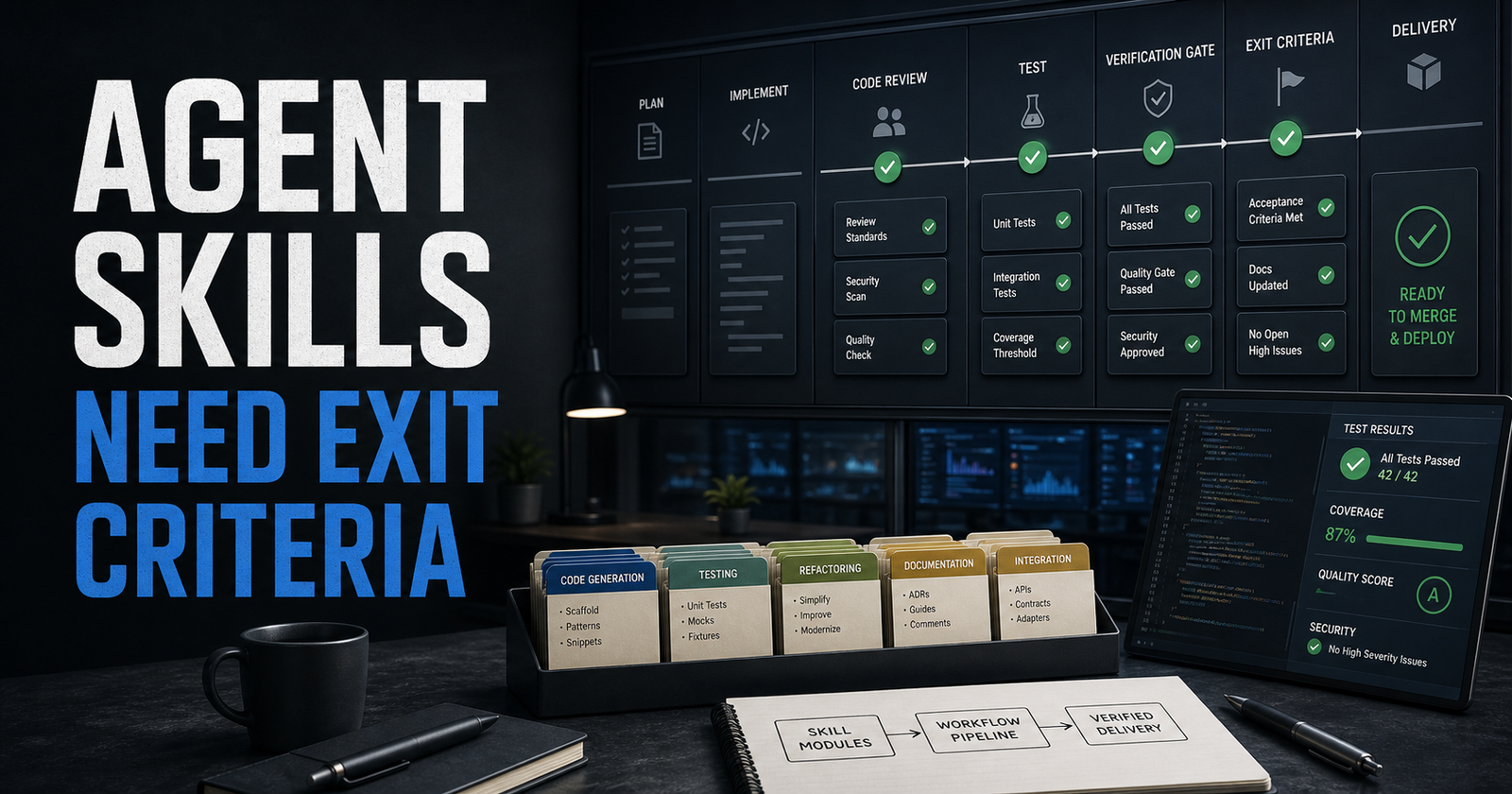
Related proof paths: OpenAI and Hugging Face eval containment, GitHub Copilot agent metrics, and agent skills as reusable runbooks. For AI governance in fintech workflows, start at /contact/.
FAQ
What is OpenAI Daybreak?
OpenAI Daybreak is OpenAI's trusted-access programme for authorized cybersecurity work, with Daybreak Blue and Daybreak Red access levels for different defensive and advanced security workflows.
Why does GPT-5.6-Cyber matter to product leaders?
It shows that advanced AI capability needs access tiers, authorization scope, monitoring, sandboxing, and human review. The control model is the product, not an afterthought.
Sources
Closing thought and further reading
OpenAI's Daybreak expansion is not only a model release. It is a product lesson in how to expose more powerful AI capability through eligibility, scope, safeguards, monitoring, and review gates.
Ideas that continue the thread.
View all essays
Building through similar complexity?
Discuss the operating decisions behind the essay, or explore where my experience can help.