In this essay
The SWIFT network itself rarely delays a payment. The delays come from what happens around the message.
The real causes
- Compliance review. A sanctions match, a missing beneficiary field, or an ambiguous purpose triggers a hold at any correspondent in the chain.
- Cut-off times. Banks have rail-specific cut-offs (e.g., USD settlement closes mid-afternoon ET). A payment sent after cut-off waits for the next business day.
- Time zones and holidays. A payment touching three countries hits three sets of holidays.
- Correspondent chain length. More hops mean more queues. Frontier corridors often have three or four hops.
- Weak or unstructured data. Truncated names, missing addresses, ambiguous identifiers cause manual review at downstream banks.
- Beneficiary bank operations. The last leg into the beneficiary's account can lag for domestic-rail reasons unrelated to SWIFT.
What gpi changes
SWIFT gpi does not eliminate delays but makes them visible. The originator's bank can see which correspondent is holding the payment and why (where the correspondent reports a reason). This converts "we don't know" into "it is at correspondent X, in compliance review."
What ISO 20022 changes
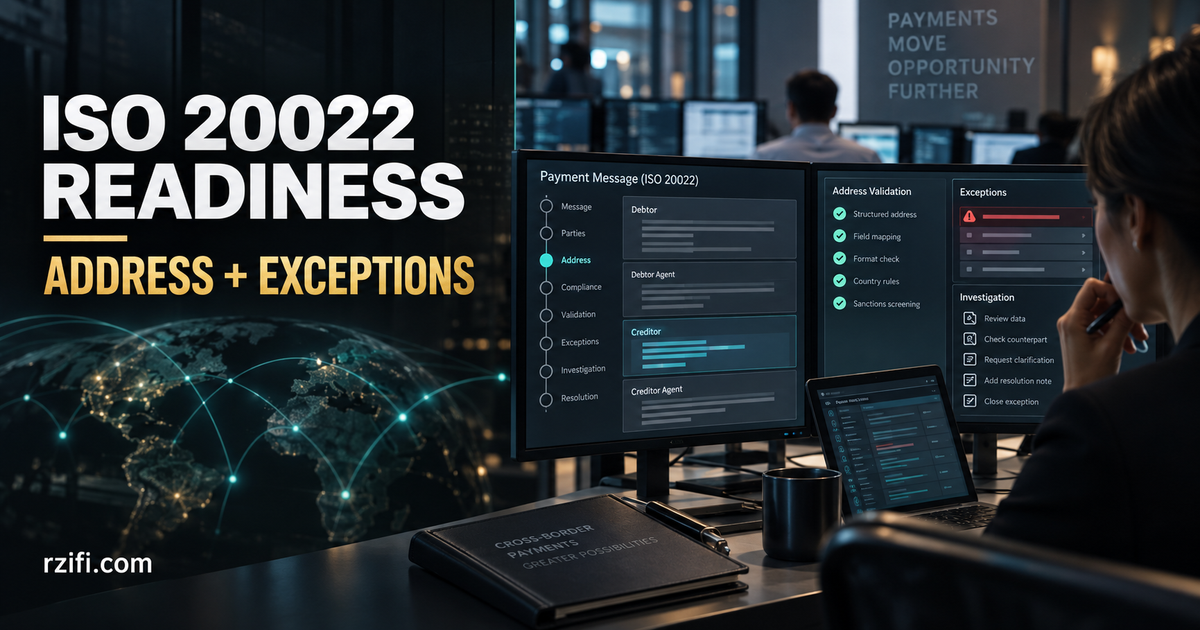
Structured party data, addresses, and purpose codes reduce ambiguity at every downstream bank, cutting one of the largest causes of compliance-driven delay. See ISO 20022 Migration.
Product mitigations
- Capture-side validation. Reject payments with weak beneficiary data at source.
- Cut-off awareness. Surface cut-offs to customers in the UX, not just to ops.
- Corridor selection. Where a local-rail alternative exists, offer it for time-sensitive payments.
- Status surfacing. Show gpi status to customers, with explanations for known delay causes.
Operator notes
- The SWIFT network is rarely the cause.
- Compliance, cut-offs, and weak data dominate.
- gpi makes delays visible; ISO 20022 reduces a major cause at source.
- Product can mitigate most of the recurring causes.
FAQ
Why does my payment say "in transit" for days? Almost always a compliance hold somewhere in the chain.
Can a delayed SWIFT payment be cancelled? Sometimes, via a cancellation request, depends on where the payment is and which correspondents are involved.
Are weekend delays normal? Yes. SWIFT operates continuously, but settlement systems and banks largely do not on weekends.
Closing thought and further reading
Most SWIFT 'delays' are not network delays. They are compliance reviews, cut-offs, or bad data.
Ideas that continue the thread.
View all essays
Building through similar complexity?
Discuss the operating decisions behind the essay, or explore where my experience can help.