GitHub Copilot's Gemini Deprecation Needs a Model Fallback Contract
GitHub Copilot's Gemini model deprecation is a useful repo-radar signal because it turns model choice into an operating dependency. Teams need fallback contracts before a provider removes a model from daily workflows.
In this essay
Model choice looks like a dropdown until the model disappears.
GitHub's latest Copilot change is small on the surface and useful as an operating signal. On July 31, 2026, GitHub said it had deprecated Gemini 2.5 Pro and Gemini 3 Flash across Copilot Chat, inline edits, ask mode, agent mode, and code completions. The suggested alternatives are Gemini 3.1 Pro Preview for Gemini 2.5 Pro and Gemini 3.6 Flash for Gemini 3 Flash.
This was not a surprise retirement. GitHub had announced the July 31 date on July 2, telling teams to update workflows and integrations before the deadline. The current note also points administrators back to model policies in Copilot settings.
For a product or engineering leader, the issue is not whether Gemini is good or bad. The issue is whether your team knows what depends on a model before the vendor changes the menu.
The Short Answer
Every AI-enabled engineering workflow needs a model fallback contract: which workflows use which models, what model policies allow, what eval pack must pass before a replacement is enabled, who approves the switch, and how users are told when behavior changes.
Without that contract, a deprecation notice becomes an incident disguised as a changelog.
The Hidden Dependency Is The Workflow
Most teams talk about AI model changes as platform housekeeping. That understates the risk.
A model can sit inside code review, test generation, incident summaries, support macros, migration planning, internal documentation, backlog triage, SQL drafting, or agentic implementation. The user may only see "Copilot" or "assistant," but the workflow has learned the behavior of a specific model.
When the model changes, output style changes. Latency can change. Tool-call behavior can change. The model may be better overall and still worse for one narrow job.
That is why the fallback decision cannot be left to individual developer preference. It needs an owner.
In fintech teams, this matters because AI workflows often touch regulated or review-heavy work: authentication changes, payment-webhook debugging, fraud-rule explanations, reconciliation SQL, release notes, and customer-facing support drafts. A model replacement that makes code faster but weakens evidence discipline is not a win.
Deprecation Is Not The Same As Shutdown
Google's Gemini deprecations documentation makes a useful distinction: deprecation is the announcement that support will end, while shutdown is when the endpoint is turned off. The same page tracks model shutdown schedules and recommended replacements.
That distinction should shape operations.
Deprecation starts the planning clock. Shutdown ends the option to delay. Between those two dates, an operating team should know:
- where the model is used;
- whether usage is direct API, Copilot policy, IDE setting, or agent configuration;
- which workflows are high risk;
- which replacement model is allowed;
- what tests or evals must pass;
- which users need communication;
- what rollback looks like if the replacement behaves badly.
The July 31 GitHub update is narrow, but the pattern is not. AI vendors will keep changing model availability, pricing, latency tiers, context windows, safety behavior, and routing defaults. Teams that treat every change as a one-off will accumulate brittle AI operations.
Model Policies Are Product Controls
GitHub's note says Copilot Enterprise administrators may need to enable access to alternative models through model policies. That is the governance surface.
Model policy is not only an admin setting. It is a product control because it decides which workers are allowed inside which jobs.
For low-risk experimentation, broad access may be fine. For high-risk workflows, the policy should be tighter. A code-review assistant that comments on style can tolerate more variance than an agent that edits authentication, payment routing, ledger state, or risk rules.
The useful policy question is not "Which models are available?" It is "Which models are approved for which class of work?"
That lets the team separate:
- exploration models for prototypes;
- standard models for day-to-day engineering help;
- approved models for agentic repository work;
- restricted models for regulated, customer-impacting, or security-sensitive paths.
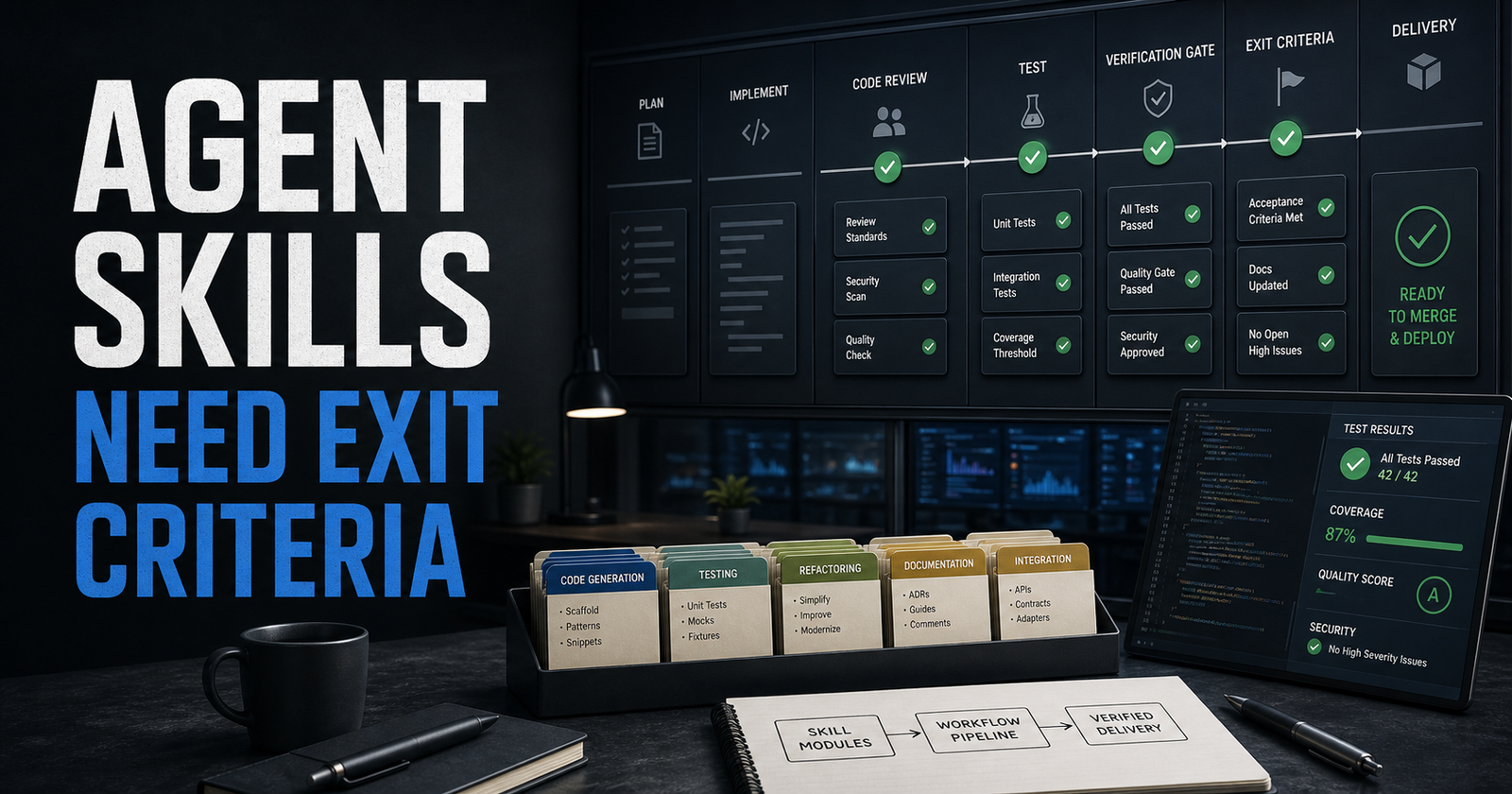
This is the same operating idea behind agent skills: reusable AI workflows need trigger rules, evidence, and exit criteria, not just better prompts.
The Fallback Contract
A practical fallback contract is short. It should fit on one page.
Start with the model inventory. List every AI workflow that matters, the current model, the fallback model, the policy owner, and the risk class. If nobody owns a workflow, it is not production-ready.
Then define the eval gate. Do not rely on broad benchmark claims. Run the replacement through your own work: pull-request comments, payment-code explanations, migration summaries, support drafts, incident reports, and any workflow where tone or precision matters.
Next, define the switch rule. A replacement can be enabled when it clears the eval pack, no critical regressions are found, and the owning team signs off. For agentic coding work, require an evidence note in the pull request or release log.
Finally, define communication. Developers should not discover the change only when their assistant starts behaving differently. Tell them what changed, which fallback is approved, where to report regressions, and which workflows should pause until validation finishes.
This is lightweight governance. It is not bureaucracy. It is how teams avoid turning vendor model changes into invisible production changes.
What To Do This Week
Open your AI tool settings and ask four questions.
Which models are enabled? Which workflows depend on each model? Which replacements are already approved? What evidence would convince you that the replacement is safe enough?
If the answers are informal, write the fallback contract now. Waiting for a deprecation notice is the wrong trigger.
For fintech and platform teams adopting AI agents in engineering, product, or payment operations, work with Rizwan to define the model inventory, policy gates, fallback tests, and review evidence before AI workflow changes become unmanaged operational risk.
Actionable Takeaway
Treat model deprecation as a release-management event. The model is not the product, but it changes the product's behavior.
The debate for AI leaders is direct: are model changes governed like production dependencies, or are they still being handled like personal tool preferences?
FAQ
What did GitHub change on July 31, 2026?
GitHub deprecated Gemini 2.5 Pro and Gemini 3 Flash across Copilot experiences and recommended newer Gemini alternatives.
Why does this matter for product and engineering leaders?
Because AI-assisted workflows can depend on model behavior. A replacement can change output quality, latency, tool use, or review evidence.
What is a model fallback contract?
It is a short operating agreement that names model usage, fallback models, policy owners, eval gates, approval rules, and communication steps for model changes.
Sources
Closing thought and further reading
GitHub Copilot's Gemini model deprecation is a useful repo-radar signal because it turns model choice into an operating dependency. Teams need fallback contracts before a provider removes a model from daily workflows.
Ideas that continue the thread.
View all essays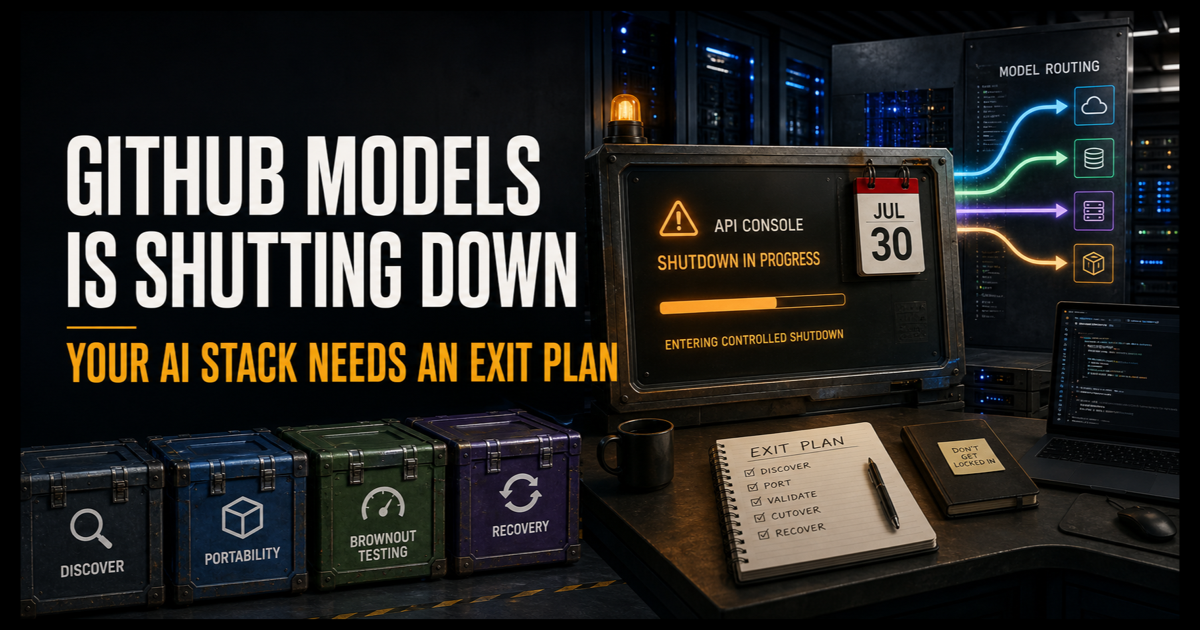
Building through similar complexity?
Discuss the operating decisions behind the essay, or explore where my experience can help.