Payment Partner Certification: A Practical Readiness and Exit Checklist
Certification is a controlled proof that a defined product, version, route, and message set meets a partner's requirements. Track scope and evidence through production release.
In this essay
“Certified” is meaningful only when it names the partner, product, environment, version, message/transaction scope, and evidence accepted. A successful sandbox test does not automatically certify a production deployment, a new message version, or every route. Use the partner’s current program guide, contract, and written approval as the source of truth.
For example, Swift's MyStandards provides base standards and market/participant usage guidelines and can test messages against relevant specifications. Swift's registered-provider self-attestation for CBPR+ separately describes specified message types and Vendor Readiness Portal testing. These examples show why a generic “ISO 20022 certified” label is incomplete. Swift MyStandards · Swift partner CBPR+ compliance
Freeze the scope
Create a one-page certification charter before coding. Include legal entity, partner/acquirer, product, regions/currencies, rails, message or transaction types, usage-guideline and API versions, participant role, expected volumes/limits if provided by the partner, and the environments in scope. Record explicit exclusions and who can approve scope changes.
Build a dependency list: certificates/keys, network connectivity, test credentials, simulator availability, test data, callback endpoints, partner contacts, settlement accounts, and third-party vendors. Note which requirements are partner policy, scheme rule, regulatory condition, or internal control.
Turn requirements into tests and evidence
Translate each partner requirement into an acceptance criterion with an owner, test case, expected result, evidence location, and pass/fail status. Cover positive, negative, boundary, malformed, duplicate, timeout, retry, and recovery behavior. Include data quality, authentication, encryption, idempotency, notification verification, settlement/reconciliation, and operational support where applicable.
For a message certification, validate the exact usage-guideline version, not only XML schema validity. Include required fields, conditional rules, code values, addresses, character sets, length limits, and reject handling. For a card/acquirer integration, cover authorization, authentication, capture, refund, reversal/void, declines, unknown outcomes, disputes notifications, and batch settlement according to the partner’s approved scope.
Save machine-readable requests/responses, sanitized logs, correlation identifiers, test environment/version, timestamps, and partner feedback. Mask credentials and personal/payment data. A screenshot alone is weak evidence if the underlying transaction/result identifier cannot be traced.
A source, version and acceptance matrix
Illustrative entries, not evidence of certification. Replace placeholders with the actual partner documents and accepted release.
| Requirement | Governing source and version | Evidence and receiving owner | Acceptance state |
|---|---|---|---|
| Message follows the agreed usage guideline | Named partner profile, release and rule identifier | Validator output and sanitized message; integration lead | Internal test passed; partner acceptance pending |
| Timeout resolves without a second money movement | Partner API/inquiry contract and deployed API version | Correlation trace, inquiry result and reconciliation; engineering and operations | Failure-path rehearsal required |
| Settlement report matches the agreed record | Settlement-file specification and effective version | Normal, late and corrective fixtures; finance owner | Finance acceptance pending |
| Production route is authorized | Named partner approval for entity, route and release | Approval reference, scope and conditions; release authority | Not authorized until explicit approval is recorded |
A changed API, usage guideline or route triggers an impact review of the affected rows. Internal pass results, vendor self-attestation, network certification and production authorization are different evidence states. Keep the partner's required terminology and acceptance authority; do not promote an internal result into certification.
Exercise negative and operational paths
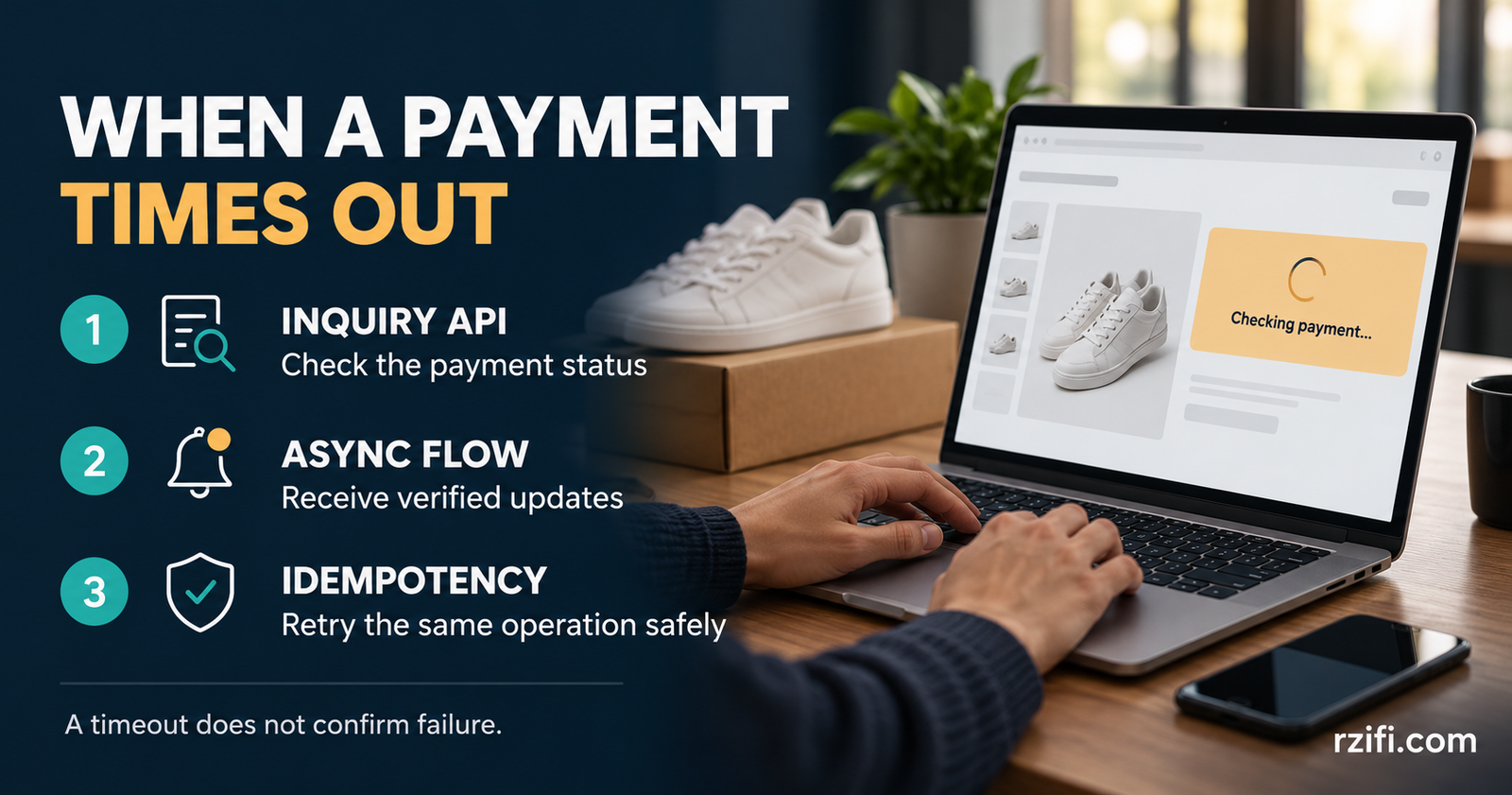
Test what happens when credentials expire, a message fails validation, a response is lost, a callback is duplicated, settlement is late, or the partner is unavailable. Verify that the system can identify an unknown result, query it safely, prevent duplicate customer actions, and escalate to a human owner. Include replay/recovery and reconciliation after outage, not just happy-path submission.
Where the partner provides a simulator or readiness portal, confirm what it validates and what remains outside it. Simulator acceptance does not prove that production credentials, firewall paths, data configuration, settlement files, or operations are ready. Record each gap and close it through a separate production-readiness test.
Manage defects and approvals
Maintain a defect log with severity, affected scope, reproducible test, owner, fix version, retest evidence, and partner decision. Define exit criteria with the partner before a critical defect appears. Do not relabel a failed test as “accepted risk” without an authorized, documented approval and expiry/review date.
Track approvals as explicit evidence: partner certification result, acquirer/network configuration confirmation, security review, data protection review, operational acceptance, finance reconciliation sign-off, and go-live approval. Some programs may require fewer or different approvals; use the named partner checklist rather than this generic list.
Production readiness and change control
Before launch, confirm production endpoint and credentials, allowlists, certificates, message/API version, limits, business hours, incident contacts, rollback or traffic-pause switch, monitoring, reconciliation, support script, and customer-impact communications. Run a controlled production smoke test only when the partner authorizes it.
Certification evidence should attach to a release/version. Changes to message rules, API version, routing, payment method, authentication behavior, or partner configuration can invalidate prior evidence. Maintain a change-impact assessment and a regression pack; re-certify where the partner requires it.
Example evidence record
Scope: PSP A, EUR credit transfer, CBPR+ pacs.008 usage guideline version X
Test: missing required creditor country is rejected before network submission
Expected: local validation error; no payment is created; operator sees repair action
Evidence: sanitized request, validator rule/version, correlation ID, response, test time
Result: passed in partner test portal; production configuration remains unverified
Owner/next step: integration lead to confirm production profile before release
This is illustrative; never place live credentials or personal data in an evidence pack.
Go-live checklist
- Certification scope and exclusions signed off by named partner/contact.
- Requirement-to-test traceability complete for all in-scope flows.
- Critical/major defects closed or formally accepted by the authorized party.
- Production configuration differs from tested configuration only through documented, reviewed changes.
- Monitoring, support coverage, exception queue, reconciliation, and rollback/pause controls tested.
- Partner approval and internal operational/finance/security approvals stored with versioned release evidence.
- Change owner and future standards-release review date assigned.
For CBPR+ change readiness, see SWIFT MT vs MX and ISO 20022 address exception readiness. For payment state and duplicate handling, see idempotency and uncertain outcomes. A checklist cannot replace a partner’s current certification program or contractual approval.
Closing thought and further reading
Certification is a controlled proof that a defined product, version, route, and message set meets a partner's requirements. Track scope and evidence through production release.
Ideas that continue the thread.
View all essays
Need help applying this to your business?
Explore practical support for payment operations, product decisions, program delivery and AI automation, grounded in the challenges behind this essay.