In this essay
The AI platform story is moving past model access.
The useful question is now operational: who controls the agent fleet?
Microsoft's Azure blog featured a 9 July 2026 announcement, "Frontier models and production agents: Advancing Microsoft Foundry for the agentic era", describing new frontier models, an Asia Pacific Data Zone, and product-agent capabilities as generally available in Microsoft Foundry. Microsoft also describes Foundry Agent Service as a managed platform for building, deploying, and scaling agents, and its documentation emphasizes evaluation, monitoring, tracing, tool controls, and model selection across the AI application lifecycle.
The strategic signal is clear: the platform race is less about who has a chat endpoint and more about who gives enterprises a control plane for agents.
The Short Answer
Production agents need a control plane. A fintech cannot manage agent risk through prompt reviews alone. It needs model routing, identity, tool permissions, trace logs, evaluations, cost controls, incident response, fallback paths, and ownership for every action the agent can take. Microsoft Foundry is one example of the broader shift from model access to agent operations.
For regulated teams, that shift is overdue.
A Model Endpoint Is Not An Agent Platform
A model endpoint can answer a prompt. An agent can observe context, call tools, write records, invoke workflows, remember state, coordinate with other agents, and affect customers or operations.
That difference changes the operating bar.
In a fintech environment, an agent might:
- triage a merchant-support ticket;
- draft a suspicious-activity narrative;
- inspect a failed payout;
- suggest a chargeback response;
- query a customer ledger;
- trigger an internal workflow;
- call a CRM or ticketing API;
- summarize compliance evidence;
- recommend a risk decision.
Each action has a different risk profile. A generic chat interface cannot govern that surface.
The platform needs to know who the agent is, what it is allowed to access, which tools it can call, what it did, what it cost, what it changed, and when a human must intervene.
That is a control plane problem.
Observability Is Not Optional
Microsoft's Foundry observability documentation says the platform supports evaluation, monitoring, tracing, token consumption, latency, error rates, quality scores, alerts, and traces across frameworks such as LangChain, LangGraph, OpenAI Agents SDK, and Microsoft Agent Framework.
That is the right category of capability because production failures rarely look like "the model is down."
They look like:
- the agent called the right tool with the wrong argument;
- a retrieval result was stale;
- a retry duplicated a workflow;
- a model upgrade changed a response format;
- a hidden dependency inflated latency;
- a safety filter blocked a legitimate support flow;
- a prompt injection changed tool behavior;
- the agent finished the task but left no useful diagnostic trace.
This is why agent auditability matters. If a team cannot reconstruct the agent run, it cannot debug the agent, defend the decision, or improve the workflow.
For payments and financial operations, trace quality is not a developer nicety. It is evidence.
Evaluations Should Gate Releases
AI teams often treat evaluations as a quality dashboard after the launch. That is too late.
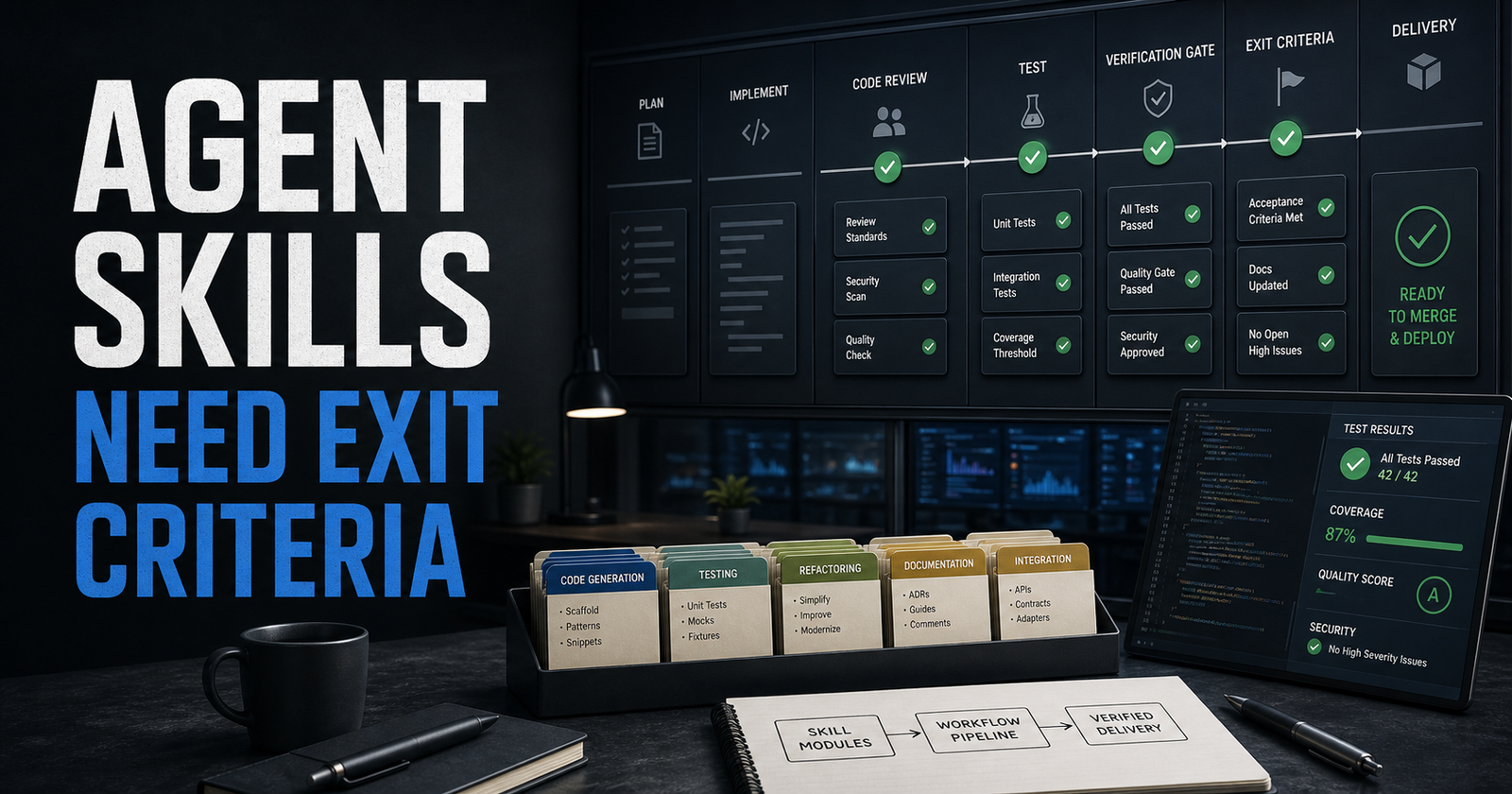
An agent release should have gates:
- Does it complete the task reliably on known scenarios?
- Does it refuse unsafe or out-of-scope requests?
- Does it call tools correctly?
- Does it produce evidence the operations team can use?
- Does it behave predictably under partial failure?
- Does it degrade safely when the model, tool, or data source is unavailable?
- Does it avoid unauthorized data access?
Microsoft's agent evaluation documentation points in this direction, with built-in evaluators for quality, safety, and agent behavior. The operator move is to make those evaluations part of release governance, not a nice-to-have.
For fintech, I would require one more dimension: business-process correctness.
A chargeback agent is not good because it writes fluent English. It is good when the evidence bundle is complete, the claim code is correct, the deadline is visible, the merchant record is preserved, and the human reviewer can approve or reject quickly.
Tool Permissions Are Product Requirements
Agents become risky when tools are treated as implementation detail.
Tool access is product scope.
If an agent can read a ticket but not update it, that is one product. If it can change status, that is another. If it can issue a refund, escalate a merchant, suspend a credential, or send a customer email, the governance level changes again.
The product manager should define tool rights in plain language:
- what the agent can read;
- what it can write;
- what it can recommend but not execute;
- what requires human approval;
- what requires step-up authentication;
- what is never allowed;
- what gets logged;
- what gets reversed after an error.
This connects to why AI and ML systems fail in production payments. Teams over-focus on model behavior and under-specify the deterministic system around the model.
The boundary between suggestion and action is where product risk lives.
Model Routing Needs A Policy
Foundry's positioning around model choice is useful because no serious enterprise agent strategy should depend on one model path forever.
But multi-model access can become chaos without a routing policy.
The policy should answer:
- Which model handles which task class?
- What are the latency and cost limits?
- Which tasks require data residency controls?
- Which tasks require a higher-accuracy model?
- Which tasks can use a cheaper model?
- How are model upgrades tested before cutover?
- What is the rollback plan if a model regresses?
- What happens when a model is unavailable in a region?
The lesson from GitHub Models' retirement still applies: portability is not a base URL. It is the surrounding operating model.
The Scorecard I Would Use
For a production-agent platform, I would track:
- active agents by risk tier;
- tool calls by permission level;
- evaluation pass rate by scenario;
- human override rate;
- hallucination or unsupported-claim incidents;
- latency and cost per completed task;
- failed tool-call rate;
- duplicate or replayed action rate;
- data-access policy violations;
- time to disable or roll back an agent.
The goal is not to make agents look impressive. The goal is to know which agents are safe, useful, and worth scaling.
Operator Takeaway
Microsoft Foundry's production-agent push is part of a broader industry turn. AI platforms are being judged on control, not only capability.
That is the right direction for fintech leaders. The winning agent platform is not the one with the longest model list. It is the one that lets product, engineering, risk, compliance, and operations understand and control what agents actually do.
The debate point: before adding another agent to the roadmap, can your team show the control plane that will govern it after the demo ends?
Talk to me about AI product operations or explore related work on AI exit planning, agent auditability, and production AI failure modes.
Closing thought and further reading
Microsoft Foundry's production-agent direction is a useful signal: the AI platform race is moving from model access to control planes for agents.
Ideas that continue the thread.
View all essays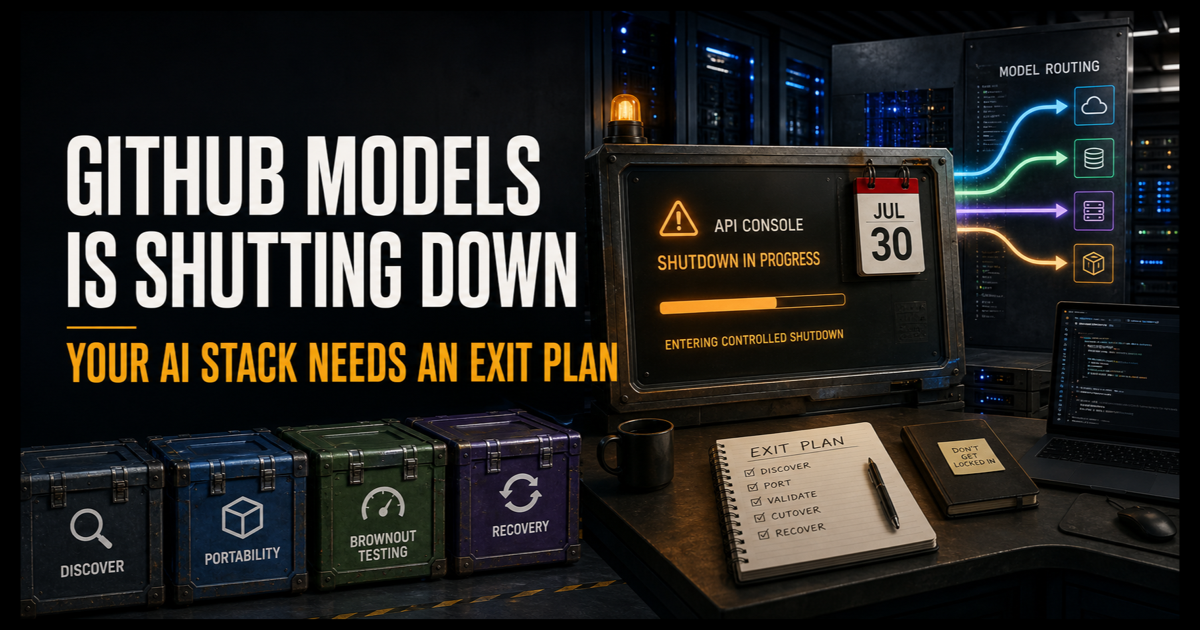
Building through similar complexity?
Discuss the operating decisions behind the essay, or explore where my experience can help.