In this essay
Experiment only when a treatment is reversible, the unit of randomisation is clear, and the team can protect payment correctness, risk and customer recovery. A higher click-through rate is not a win if it creates duplicate charges, worsens false declines or leaves support unable to explain an outcome.
Microsoft’s experimentation platform checks whether the observed treatment/control allocation matches the intended allocation; a sample-ratio mismatch can invalidate a result before teams argue about the metric. Microsoft Research, ExP alerting Treat allocation, exposure and event logging as part of the product release, not analyst cleanup.
Decide whether an experiment is appropriate
Do not ship unlawful or unauthorised changes, alter agreed prices without the required consent, or weaken a required control. A different measurement method does not make those changes acceptable. For an otherwise permissible change that is unsuitable for randomisation or cannot be safely reversed, assess a controlled rollout or pre/post measurement with the necessary approvals and recovery controls. Experiments fit choices such as status wording, onboarding sequence, dashboard defaults or an optional checkout explanation when the underlying payment rule remains the same.
Write five lines before building: the decision, eligible population, randomisation unit, primary outcome and guardrails. Use the customer or merchant as the unit when repeated exposure would contaminate an individual journey; use a session only where each exposure is genuinely independent.
Worked illustrative example: payout-status clarity
Illustrative example, not a reported implementation. A platform wants to test whether a clearer payout-status page reduces “where is my money?” contacts. Eligible merchants have at least one completed payout before assignment and no active exception at enrollment. Randomise eligible merchants 50:50, with the planned duration and minimum detectable change agreed before exposure. Cover at least the relevant payout cycle and extend observation where the volume or outcome lag requires it. The treatment explains expected date, current state and next action; it does not promise an earlier settlement.
The primary metric is status-related contacts per eligible payout. Guardrails are incorrect-status reports, repeat dashboard visits without resolution, payout reversals, complaint rate and support handling time. Instrument exposure, payout ID, payment state, partner state and contact reason. Set exclusions before assignment using information available at that point. If an unresolved or duplicate state appears after assignment, keep the assigned merchant in the primary analysis and record the event as a guardrail breach or unresolved outcome. Investigate it; do not remove treatment-related failures to improve the result.
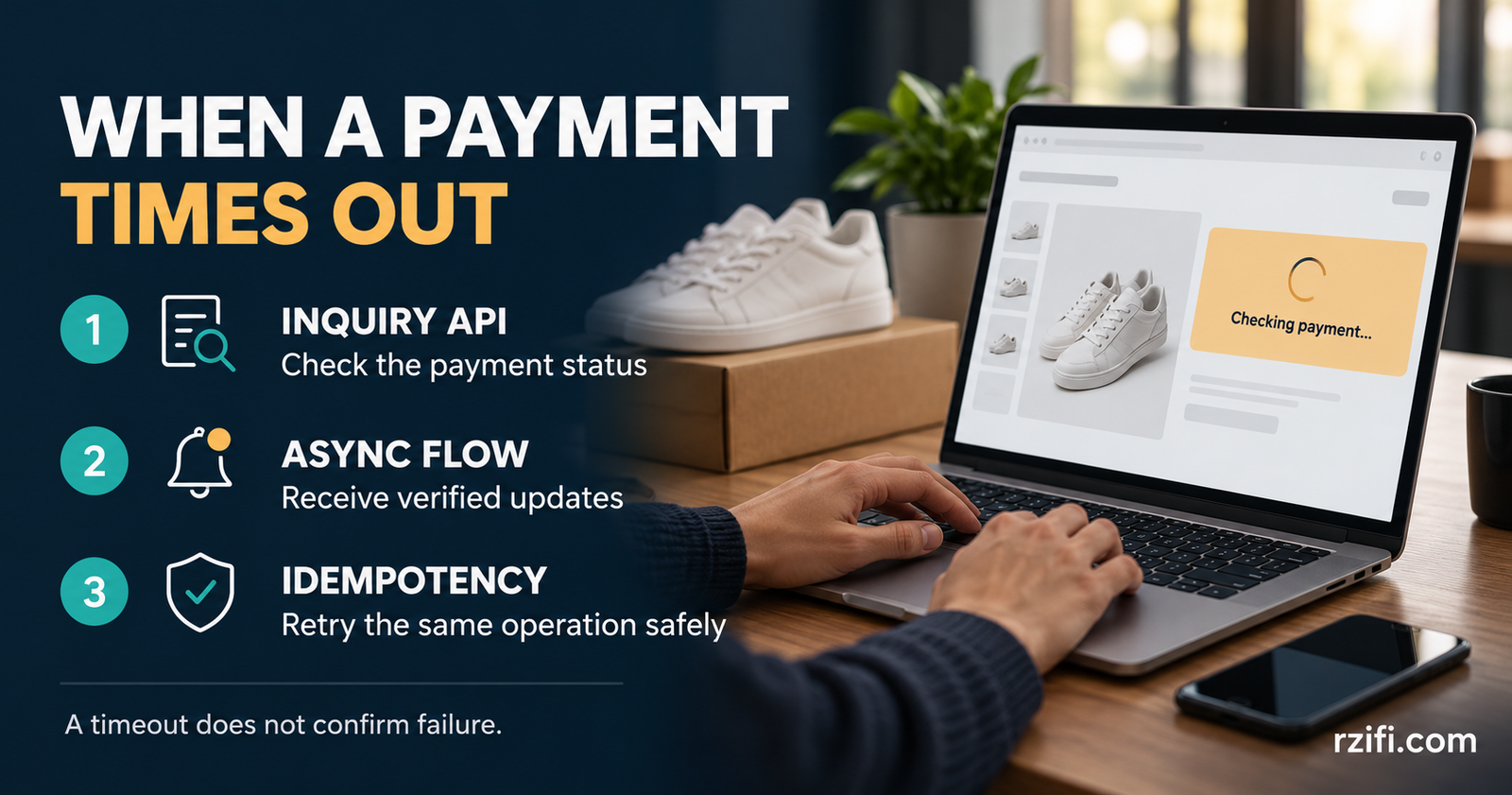
Before reading results, agree the decision rule: expand only if contacts fall without a material guardrail deterioration, investigate if treatment allocation or event completeness fails, and stop if customer confusion rises. The payment timeout guide explains why unknown outcomes need an inquiry path rather than optimistic retries.
Check validity before effect size
- Confirm the intended and observed allocation; investigate sample-ratio mismatch.
- Check that both groups have the same eligibility and exposure window.
- Verify that logging survives retries, browser changes and partner delays.
- Inspect important segments such as payment method, merchant tier and country before making a global claim.
- Separate a movement caused by traffic mix or an incident from a movement caused by the treatment.
An experiment is evidence for a decision, not a permanent feature entitlement. Record the hypothesis, versions, dates, exclusions, result, limitations and final owner decision. This makes the next experiment cheaper and prevents a dashboard screenshot becoming organisational memory.
Limitations
Most payment outcomes take longer than a click. Settlement, refunds, disputes and repeat behaviour may mature after the experiment window. Where the lag is material, use a leading indicator only as a provisional signal and schedule the later review. Do not treat statistical significance as permission to ignore legal, operational or funding constraints.
Checklist
- Is the change reversible and fair to eligible users?
- Are money movement, entitlement and compliance rules identical across groups?
- Are success and harm metrics defined before exposure?
- Can operations identify and resolve a treatment-related exception?
- Is there a hold, rollback and post-settlement review owner?
For the surrounding product process, use the payments product-management toolkit: experimentation follows a defined problem and does not replace discovery.
Closing thought and further reading
Run a payment experiment only when the treatment can be reversed safely and its success is measured alongside payment correctness, risk and support guardrails.
Ideas that continue the thread.
View all essays
Need help applying this to your business?
Explore practical support for payment operations, product decisions, program delivery and AI automation, grounded in the challenges behind this essay.