In this essay
A customer saves a card while buying groceries. The checkout promises that their next purchase will be quicker. A month later, a different team uses that saved reference to collect a subscription payment.
This is a fictional product scenario. It exposes a decision that a token alone cannot answer: what future use did the customer agree to? A reusable credential, the customer's permission and the payment being requested need to fit together. Finding a card in the account is only the beginning of that check.

Check permission at the right point
Separate shopper-selected checkout use from a merchant-initiated subscription or other agreed future collection.
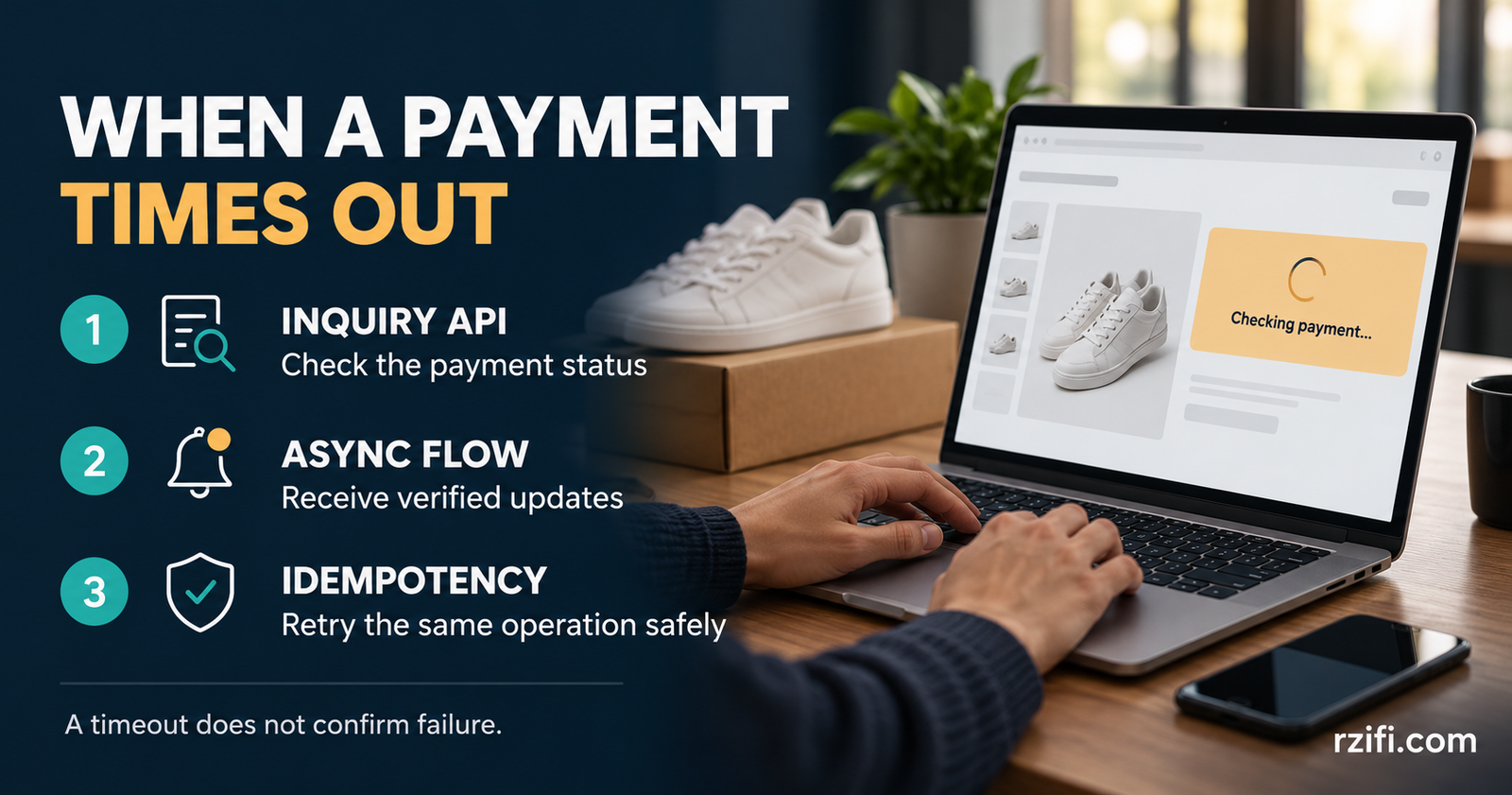
Use the original operation identity to distinguish queued work from an in-flight payment.
Continue this inquiry even if permission has since changed. Cancellation is not proof of reversal; apply the separate refund or final-balance decision where appropriate.
Check customer ownership, agreement scope, effective changes and credential status.
Resolve the relevant customer choice or agreement. A stored credential alone does not grant permission.
Use the provider’s correct interaction classification. Handle any required customer authentication and the actual payment result.
Removing a checkout shortcut, deleting a provider token and cancelling an agreement may have different effects. The customer-facing action must describe the effect the system actually enforces.
Start with the next purchase the customer expects
Imagine two choices on the same grocery site. One lets a returning customer choose their saved card at checkout. The other enrolls them in a weekly delivery plan that the merchant bills automatically. The interface may show the same card ending in the same four digits, but the customer is agreeing to different actions.
Stripe's Setup Intents guidance separates permission to display a payment method at a future checkout from an agreement to initiate payments while the customer is absent. For the latter, it calls for terms covering permission, expected frequency and how the amount is determined. That is provider guidance for its integration; the actual arrangement also needs the applicable market and network requirements. Stripe Setup Intents
Give those choices distinct explanations and record the purpose selected. A customer saving a checkout shortcut should not need to discover that another feature interpreted the choice as agreement to a subscription. Likewise, the subscription screen should explain how future collection works, rather than relying on a checkbox encountered during an unrelated purchase.
Follow three records, not one saved-card flag
The following model is a proposed way to keep the product decision visible. It is not a required database schema or a universal provider contract.
| Record | Question it answers | Example evidence |
|---|---|---|
| Stored payment method | Which reusable reference can this integration use? | Provider account, customer reference, stored-method identifier and current status |
| Permission or agreement | What use did the customer accept? | Purpose, version of terms, confirmation event and effective changes |
| Payment intent | Why is this particular amount being requested now? | Purchase or billing reference, amount, currency and initiating interaction |
Link the records through identifiers that the authorized teams can trace. Do not make a support operator infer an agreement from a successful payment or infer the payment's purpose from a token's existence. A technically usable reference may be attached to the wrong customer account or invoked for the wrong business reason.
Adyen's documentation illustrates the distinction between interactions. It identifies shopper-initiated stored-card payments, regular subscription collections and merchant-initiated collections at irregular intervals. Its request fields express those specific models. A team using another provider should map the underlying interaction into that provider's documented contract, rather than copy the field names. Adyen token payments
Make the settings page describe the actual action
“Remove card” sounds simple until the same credential is connected to checkout, a subscription and a pending purchase. Define the effect before choosing the label.
| Customer action | Product decision to make explicit | Evidence needed before confirming completion |
|---|---|---|
| Remove a checkout shortcut | Does this hide a payment option, delete a reusable reference, or both? | The affected checkout and provider records reflect the promised change |
| Change the subscription's payment method | Which future collections move to the replacement method? | The billing relationship points to the intended usable reference |
| Cancel a subscription | When does the service and billing arrangement end? | The subscription state and effective date match the confirmed request |
| Withdraw permission for a particular future use | Which jobs and interfaces must stop using that permission? | Execution checks recognize the updated permission before another action |
These are design questions, not permission to retain a capability after a customer has asked to remove it. The intended effect needs review for the actual product and market. If an existing arrangement needs a replacement payment method or has an outstanding amount, explain that situation and provide a clear way to resolve it. Do not quietly translate a removal request into a cosmetic change.
Adyen documents a provider-side deletion operation for stored payment details and lifecycle notifications for token changes. That is a concrete integration action to reconcile with the account screen. A local interface change should not be presented as proof that a provider-side operation has completed. Adyen token management
Separate cancellation from the final account balance
Consider the grocery subscription again. The customer cancels after receiving this week's delivery. Whether another amount remains due depends on the agreement and the service already provided. The cancellation confirmation should explain the effective date and any known final account activity accurately.
Stripe Billing supports different cancellation timings and documents cases where pending invoice items or a final invoice can still matter. It also distinguishes pausing payment collection from changing the subscription's status. These examples show why a single “off” flag is an incomplete description of that provider's billing workflow. Stripe cancellation guidance
A useful product review follows the cancellation into every place that can initiate another collection. A scheduled job may have copied yesterday's subscription state. A support operation may still be open. A replacement credential may be linked while cancellation is being processed. Define which record is checked at execution time and how a race is resolved.
Record the outcome as well as the request. If the request is waiting for a downstream response, show that state to the responsible operator. If an attempt was already submitted, recover its actual outcome through the provider's supported process. Do not label an unconfirmed operation completed merely to remove it from a queue.
A token has a scope; it is not an agreement
EMVCo describes an EMV Payment Token as an alternative to the primary account number, with constraints such as a particular merchant, device or payment scenario. It also distinguishes network payment tokenization from tokenization at other points in the payment chain. The word “token” therefore needs a specific meaning in an integration discussion. EMVCo payment tokenization
For the proposed control model here, treat credential capability and customer permission as separate checks. An updated or still-usable token does not establish that a cancelled business arrangement should resume. A support screen should expose the permitted purpose and state rather than encouraging an operator to copy a reusable reference into a new workflow.
Successful setup also does not prove that a later purchase will succeed. Stripe describes setup usage as an optimization and says later authentication can still be needed. Keep a customer recovery path for that outcome. Stripe Setup Intents
Test changes while work is already in progress
The following cases are proposed tests. They are not claims that a merchant integration has passed them. Use suitable provider test facilities and controlled merchant-side simulations, and retain the observed state changes.
- Save a card for returning checkout only, then attempt to start a separate automatic collection without the relevant agreement. Confirm the product blocks the unsupported use.
- Give the customer both a checkout shortcut and a subscription. Exercise each removal or cancellation action and verify the precise effect promised on screen.
- Cancel while the next collection is queued. Check that the worker reads the effective agreement state before submitting another request.
- Submit cancellation after a payment request has already left the merchant. Confirm that operations can distinguish that attempt from a new collection and recover its outcome.
- Delete a stored method while a delayed account update is pending. Confirm that a stale update does not silently restore the removed capability.
- Replace a subscription's payment method. Confirm that subsequent work uses the correct relationship and does not collect through both references.
- Require authentication on a later payment. Verify that the customer receives the appropriate recovery path without being told that saving the card guaranteed approval.
- Sign in as another customer and try to use the original saved reference. Confirm the merchant enforces account ownership as well as provider-level controls.
For each case, compare the customer message, agreement record, provider state and downstream job. A clean account screen alone cannot establish that a queued payment was stopped. Equally, a deleted token does not explain the commercial status of an unrelated service agreement.
The product should leave the customer able to answer two questions: what can this saved method be used for, and what changes when I remove it? For the broader billing workflow, continue with the recurring-card lifecycle guide. This guide focuses on the choices and evidence around permission, so those choices remain understandable when several features share one payment method.
Closing thought and further reading
One stored payment method can support several features. Each needs a clear purpose, permission record and an honest explanation of what removal changes.
Ideas that continue the thread.
View all essays

Need help applying this to your business?
Explore practical support for payment operations, product decisions, program delivery and AI automation, grounded in the challenges behind this essay.