In this essay
A designer opens a software workspace on the first day of a new subscription period. The account says “active.” Finance later finds an open invoice, while support sees a failed payment attempt. Each team is looking at a real record, but the records answer different questions.
The period can advance before the business has collected the amount it expects. Access may follow a configured policy that differs from the payment state. A renewal message should therefore describe the event it actually represents.
This article follows a fictional design-tool subscription. The proposed record model is a product design aid. Provider statuses, collection methods and retry settings need to be mapped to the actual integration before implementation.

Keep five records connected
Start with the commercial arrangement and the period being billed. Then distinguish the invoice, each collection attempt and the customer's access entitlement. Collapsing them into one “renewed” flag makes an exception difficult to explain.
| Record | Question it answers | Example of a misleading inference |
|---|---|---|
| Subscription agreement | What continuing service has the customer accepted? | A stored card means every future amount is permitted |
| Billing period | Which service interval is being considered? | The new period proves money was collected |
| Invoice | What amount is recorded as due and how is it disposed of? | An invoice exists, so a payment was attempted |
| Payment attempt | What happened to this collection operation? | A local timeout proves the provider declined it |
| Access entitlement | Which features may the customer use now? | Access is enabled, so every old invoice is paid |
Stripe's current subscription documentation makes several of these distinctions explicit. An active subscription does not necessarily mean all associated invoices are paid. A past_due status does not guarantee another attempt. Its configured unpaid state can retain the subscription and generate invoices without attempting payment. Those are Stripe-specific behaviours, not a universal subscription contract. Stripe subscription lifecycle
Give the records stable identifiers and visible links. Support should be able to move from the customer's period to the relevant invoice and attempt without searching by an approximate amount.
Follow one renewal through its possible outcomes
In the fictional service, a period begins on the first day of the month and an invoice is created for the agreed package. The integration records whether collection is automatic or whether the customer is expected to pay an invoice. It must not run a custom automatic collection simply because the period began if the selected arrangement expects another payment route.
If a permitted attempt succeeds, join the confirmed payment to the invoice using the provider's supported relationship. Apply the service's access policy and send a message that identifies the covered period. A financial record may also be adjusted, voided or marked uncollectible under an authorized process; such a disposition must not be described as a successful cash payment.
If the attempt is declined or requires customer action, preserve the specific outcome and the next permitted action. The customer may need to authenticate or replace a payment method. The product should explain that action through a secure route without claiming that a later attempt is already guaranteed to succeed.
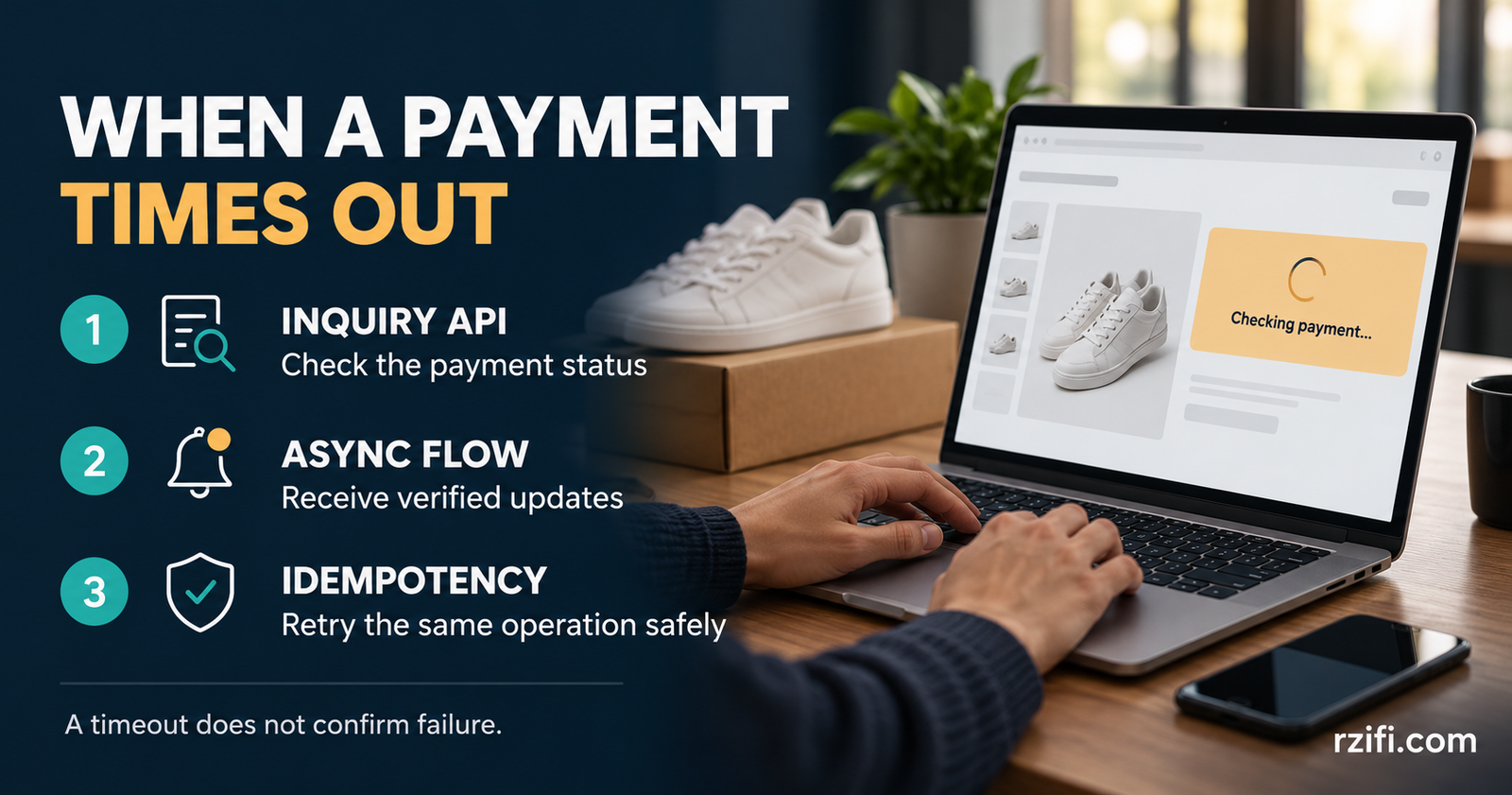
If the connection times out, the outcome is unknown. Do not move directly to a fresh payment instruction. Recover the original provider record and keep the invoice tied to the same investigation.
Billing links the commercial arrangement to the amount and collection method.
Use the provider record and the supported version-specific recovery path.
Recover the original operation. Do not create a fresh payment merely because the local request timed out.
Recheck the original attempt using recovered evidenceFollow the configured recovery owner and customer-action path. Reassess the original invoice before any permitted next attempt.
Reassess the invoice after the required customer or billing decisionDistinguish actual payment from an authorized adjustment, void or uncollectible decision.
State the covered period, verified payment or open account issue, and the next responsible action.
A renewal date and a saved credential do not prove payment. Keep the original attempt, invoice disposition and service-access decision traceable separately.
Recover an uncertain attempt within the provider contract
Stripe exposes retrieval for an existing PaymentIntent. That gives an integration a supported way to inspect the object it previously created; it does not make a missing local reference disappear. Save the provider identifier and merchant-side operation reference as early as possible, and define recovery for a response lost before an identifier is received. PaymentIntent retrieval
For Stripe API v1, idempotent requests can replay the saved result after endpoint execution begins, and keys can be pruned after the documented retention period. API v2 has different recovery semantics. A repeat request must follow the selected endpoint and version contract. An idempotency key is not a universal lock across billing systems or providers. Stripe idempotent requests
The broader payment inquiry and idempotency guide covers those mechanics. In a renewal design, the additional question is which invoice and service period the recovered payment belongs to. A payment recovered for last month's invoice should not silently satisfy a different amount this month.
Give one system ownership of the next attempt
A subscription provider may already manage recovery according to configured settings. A merchant worker that independently retries the same receivable can create competing actions. Decide which component owns the attempt schedule and how other components learn its disposition.
This is an implementation recommendation, not a claim that every provider offers the same retry orchestration. The owner should record the last known result, current eligibility, next action and any customer intervention required. A change in payment method should update the relevant relationship without causing both the old and new workers to collect independently.
Consider a support agent offering a payment link while an automatic retry is still pending. The customer could use the link before the scheduled attempt starts. The integration needs a way to observe the invoice's current disposition and prevent an obsolete collection from proceeding. Where a request has already been submitted, recover that request's outcome rather than pretending it can be erased from a queue.
Make access policy a deliberate product decision
A service may allow a defined recovery period, restrict selected features or suspend access according to its agreement and applicable requirements. Those choices should be specified and tested. They should not emerge accidentally from whichever event arrived most recently.
For example, a delayed failure event for an older attempt should not revoke access without checking the current period and relevant invoice state. A payment received after a cancellation request should trigger the appropriate account review; it should not automatically restart the commercial arrangement.
Keep customer communication aligned with the decision. “Your next period has started,” “we could not collect this invoice,” and “your payment is confirmed” convey different information. Use each only when its evidence exists.
Exercise the transitions before relying on the dashboard
Test a renewal with no payment attempt, a confirmed decline, required authentication, a lost response, a late success event and a paid invoice that still has an obsolete retry queued. Include a customer with an older outstanding invoice and a newer settled one, because a summary subscription label can hide that difference.
For every case, compare the agreement, period, invoice, attempt and entitlement records. Retain the observed references and the customer message. A test that checks only the account badge can miss the financial error that support will later have to explain.
Finally, test cancellation near renewal using the membership cancellation workflow. The case is complete when the team can state which period is covered, what amount remains due, what has actually been collected and what the customer can use. “Active” is useful shorthand only when the underlying records remain accessible.
Closing thought and further reading
A renewed period and an active account can coexist with an unpaid invoice. Follow the billing records before deciding what the customer owes or can use.
Ideas that continue the thread.
View all essays

Need help applying this to your business?
Explore practical support for payment operations, product decisions, program delivery and AI automation, grounded in the challenges behind this essay.